
Persistent fever, pallor, bruising, bone pain or repeated infections can look like ordinary childhood illnesses, but a pattern that persists, worsens or combines several warning signs deserves medical assessment. By the end, you will know what early evaluation can establish, which tests confirm leukemia, how doctors assess urgency and risk, and what to do while waiting for specialist review.
Key takeaways
- Seek assessment for persistent, worsening, or unexplained symptoms.
- Ask whether a complete blood count with differential is needed.
- Leukemia confirmation requires blood tests, marrow examination, and classification.
- Bring symptom timelines, medicines, and prior test reports to the appointment.
Which warning signs deserve prompt assessment?
A single mild symptom often fits an illness that can be watched with advice from your child’s clinician. The concern rises when symptoms persist, recur, appear in combination, worsen, or lack a clear explanation. Pediatric leukemia warning signs are not proof of leukemia, but they deserve prompt assessment.
| Pattern | What to do |
|---|---|
| Persistent fever, especially without a clear source | Arrange prompt medical assessment; seek urgent care for a child receiving leukemia treatment, particularly with neutropenia |
| Pallor and fatigue, weakness, breathlessness, or reduced activity | Book an assessment if these last several days, worsen, or occur together |
| Bruising and petechiae, frequent nosebleeds, or bleeding without a clear injury | Contact a clinician promptly, especially when new spots multiply |
| Bone or joint pain, limping, swollen lymph nodes, abdominal swelling, weight loss, or recurrent infections | Arrange assessment when symptoms persist, recur, or occur in combination |
| Brief fever with improving cold symptoms, normal activity, drinking, and no unusual bleeding or pallor | Follow home-care advice and monitor; seek care if the pattern changes |
Do not wait for every sign to appear. A normal or mildly abnormal white-cell count does not exclude acute leukemia, and symptoms alone cannot confirm it; doctors use an examination, complete blood count with differential, and blood-film review to decide what testing comes next.
A child on treatment with fever needs immediate contact with the treating team, even without chills or a visible infection.
What happens during the first medical evaluation?
At the first visit, the clinician combines a physical examination with targeted blood tests; no single symptom or white-cell result proves or excludes leukemia. The examination checks pallor, bruising or petechiae, swollen lymph nodes, bone tenderness, fever, and enlargement of the liver or spleen.
It also records weight, heart rate, breathing, and signs of infection or bleeding.
| Test or finding | What it can show | Usual next step |
|---|---|---|
| Complete blood count with differential | Anemia, low platelets, unusual white-cell numbers, or immature cells | Repeat promptly or arrange pediatric hematologist referral when unexplained or markedly abnormal |
| Peripheral blood smear | Blasts, abnormal cell shapes, or patterns missed by automated counting | Urgent specialist review if blasts or concerning abnormalities appear |
| Reticulocyte count and coagulation tests | Whether anemia reflects reduced production and whether bleeding risk is present | Add supportive care and specialist input when results are abnormal |
| Kidney and liver tests, electrolytes, uric acid, and LDH | Organ stress or rapid cell breakdown in a seriously ill child | Urgent hospital assessment when results or symptoms suggest an emergency |
An abnormal blood count needs interpretation in context. A normal white-cell count does not rule out acute leukemia: anemia or thrombocytopenia may be the main clues, and blasts may be absent from the smear. Persistent or unexplained abnormalities, especially in more than one blood-cell line, warrant pediatric hematologist referral and sometimes bone-marrow testing.
How is leukemia confirmed and classified?
Leukemia is confirmed by examining marrow cells and classifying them with cell-surface, chromosome and gene tests—not by symptoms or a white-cell count alone. Fever, pallor, bruising, pain and swollen glands overlap with common illnesses, while a normal or mildly abnormal count does not exclude leukemia.
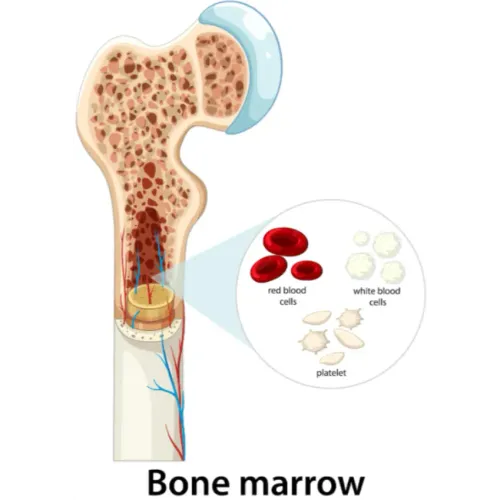
A complete blood count, differential and blood-film examination can raise concern, but blasts may be absent from circulating blood. Doctors may therefore perform bone marrow aspiration and biopsy, including a small core of marrow, to examine cell shape, maturity and the proportion of abnormal cells.
The work-up answers four separate questions:
- Bone marrow morphology: Are abnormal immature cells replacing normal blood-forming cells?
- Flow cytometry: Which proteins sit on the cells’ surfaces, and do they show a lymphoid pattern consistent with acute lymphoblastic leukemia (ALL) or a myeloid pattern consistent with acute myeloid leukemia (AML)?
- Cytogenetic testing: Are there chromosome changes, such as translocations, deletions or extra chromosomes, that define a subtype or alter risk?
- Molecular testing: Are there specific gene mutations or rearrangements that guide targeted treatment, prognosis or measurable residual disease (MRD) testing?
These results establish lineage and genetic subtype, then combine with age, presenting white-cell count, central-nervous-system findings and early treatment response to assign risk. Two children with the same broad diagnosis can need different treatment intensity or duration. After therapy starts, persistent MRD can reveal leukemia that a routine microscope misses and prompt treatment intensification.
How does early diagnosis change safety and treatment planning?
Timely diagnosis gives clinicians more time to make treatment safer and more precise, but there is no universal deadline for every child. It limits ongoing exposure to marrow failure, infection, bleeding and leukostasis while allowing urgent confirmation, stabilization and planning before complications develop.
1. Risk stratification combines leukemia subtype, chromosome and gene findings, and early treatment response. Measurable residual disease after induction or consolidation can reveal leukemia that routine microscopy misses, guiding treatment intensity and transplant discussions.
2. A high circulating or marrow burden can trigger tumor lysis syndrome when treatment begins, causing dangerous potassium, phosphate, calcium, uric acid and kidney changes. Early recognition allows hydration, uric-acid control and close electrolyte and renal monitoring.
3. The team can arrange infection precautions, blood typing and transfusion support, central-line planning, fertility counselling and psychosocial support. For children whose risk and response make transplantation appropriate, early referral permits HLA typing and donor evaluation.
Urgency depends on the child’s symptoms, blood counts, leukemia biology, disease burden and complications. Respiratory or neurological symptoms from leukostasis, or spontaneous tumor lysis syndrome, require hospital management immediately; a stable child still needs prompt specialist assessment.
Early diagnosis does not automatically mean a transplant: prognosis and treatment depend on subtype, genetics, response, MRD and relapse biology.
What should families do after leukemia becomes a concern?
Ask your child’s doctor for urgent pediatric leukemia care when the examination or blood count raises concern. Request referral to a paediatric hematologist rather than waiting for symptoms to settle, and take copies of the complete blood count, differential, blood-film report and previous results.
- Ask which tests must happen urgently, including bone-marrow examination, flow cytometry, chromosome testing and molecular tests.
- Give the team a full medication history and report fever, bleeding, breathing difficulty, severe weakness or reduced alertness immediately.
- Follow instructions for infection prevention: avoid sick contacts, wash hands, check temperature as advised and never wait for a second fever during treatment.
- Ask how low haemoglobin or platelet counts will be managed, including when transfusion support is needed and which symptoms require hospital assessment.
- Ask how treatment response and measurable residual disease will guide the next decision. Bone marrow transplant planning applies to selected high-risk, persistent, refractory or relapsed disease; it is not automatic after diagnosis.
Dr. Atish Bakane can help families coordinate specialist evaluation, supportive care and treatment decisions when a child needs paediatric hemato-oncology expertise.
Before chemotherapy, ask about hydration, uric-acid control and kidney or electrolyte monitoring because tumour lysis can develop soon after treatment, and occasionally before it starts. Keep one written list of phone numbers, medicines, test results and emergency instructions so decisions do not depend on memory during a crisis.
Related service
EXPERTISE Cancer can affect all parts of the body, including the blood. Leukemia and lymphoma are types of blood cancer. View service → |
Frequently asked questions
Which warning signs of pediatric leukemia deserve prompt assessment?
Arrange prompt medical assessment when symptoms persist, recur, worsen, appear together, or lack a clear explanation. Warning signs can include unusual bruising or bleeding, persistent fever, marked tiredness, paleness, bone or joint pain, swollen lymph nodes, repeated infections, or unexplained weight loss.
What happens during the first medical evaluation?
The clinician reviews symptoms, timing, medical history, medicines, infections, and family history, then examines the child. They may order a complete blood count with differential and other tests based on the findings.
How is pediatric leukemia confirmed and classified?
Doctors use blood testing and usually a bone marrow examination to confirm leukemia. Flow cytometry, cytogenetic testing, and molecular tests identify the leukemia subtype and guide risk classification.
How does early diagnosis change treatment planning?
Early diagnosis gives the care team more time to assess complications, protect against infection and bleeding, arrange specialist care, and select treatment based on the leukemia subtype and risk group.
What should families do after leukemia becomes a concern?
Follow the clinician’s testing instructions, record symptoms and temperatures, bring all reports and medicines, and seek urgent care for heavy bleeding, breathing difficulty, severe weakness, confusion, or a child who is difficult to wake.