
Fever, bruising, fatigue, pain or a lump can reflect an ordinary childhood illness, but persistence, worsening or several symptoms together deserve a clearer plan. You will learn which changes need emergency care, when to arrange paediatric review, what a child cancer specialist looks for and how to interpret initial test results without assuming a cancer diagnosis.
Key takeaways
- Seek emergency care for breathing difficulty, seizures, unconsciousness or severe bleeding.
- Arrange a same-week visit when symptoms persist, recur or appear in combination.
- An abnormal screening result does not confirm cancer; specialists interpret it with the child’s history.
- Specialist assessment connects diagnosis with treatment, transplant decisions and long-term follow-up.
Which symptoms need emergency care, a same-week visit or observation?
Use three questions: Is the child seriously unwell now? Are symptoms persisting or combining? Is there a clear, short-lived explanation?
| Urgency | What to do | Warning signs |
|---|---|---|
| Emergency today | Go to emergency care now | Breathing difficulty; severe weakness or drowsiness; confusion; seizure; severe or rapidly worsening headache with repeated vomiting; uncontrolled bleeding; rapidly enlarging abdominal swelling; or fever in an infant who appears seriously unwell. |
| Same-week review | Arrange a paediatrician visit | Unexplained or persistent fever, marked fatigue, pallor, unusual bruising or bleeding, recurrent infections, bone or joint pain, a new limp, a painless lump, abdominal swelling, persistent headache or vomiting, night sweats, or unintentional weight loss. |
| Routine observation | Monitor and seek advice if it changes | The child is otherwise well and has a short-lived symptom with a clear explanation, such as a bruise after a documented fall or fever during a typical viral illness. |
Move from observation to prompt review if a symptom persists, returns, worsens, or appears with another warning sign. Pallor in children plus fatigue plus bruising deserves assessment even when each feature seems mild. These child cancer warning signs usually have non-cancer causes, including infections and minor injuries; a checklist cannot diagnose cancer.
Trust your concern if the child’s condition deteriorates, regardless of how long the symptom has lasted.
Why age and symptom patterns change what you notice
Age changes the clue you notice: the same underlying problem may appear as a feeding or behaviour change in one child and clearly described pain in another.
- Infants may have poor feeding, reduced alertness, irritability, pallor, failure to gain weight, persistent fever or unusual swelling because they cannot describe pain.
- Young children may limp, stop playing, resist walking, develop abdominal fullness or have repeated infections without identifying where it hurts.
- Older children can report bone pain, headaches, visual changes, fatigue and weight loss more precisely, giving you a clearer symptom timeline.
- Adolescents may minimise symptoms, hide bruising, blame fatigue on school or sport, or present with night sweats, a lump or sustained weight change.
Childhood cancers are uncommon compared with infections and other illnesses, and these patterns usually have non-cancer explanations. A symptom checklist cannot diagnose cancer.
No universal symptom-duration cutoff rules cancer in or out. Ask for reassessment when symptoms return after seeming to improve, worsen despite routine treatment, or occur together.
A normal-looking child or one normal blood count does not exclude every cancer, particularly a solid tumour that does not primarily involve bone marrow.
What happens when a child is referred to a cancer specialist?
A referral is clinical reasoning, not an automatic cancer diagnosis. The child cancer specialist, usually a paediatric haematologist-oncologist, takes a timeline of fever, pain, bleeding, infections, weight and energy changes, medicines, possible exposures and family history.
The physical examination covers height, weight, growth trajectory, growth and development, skin and mucous membranes, lymph nodes, and the abdomen for an enlarged liver, spleen or mass. It also assesses bones and joints, plus neurological findings such as balance, strength, vision and altered alertness.
The specialist compares cancer with viral or bacterial infection, iron deficiency, immune or inflammatory disease, medication effects, trauma, benign lymph-node enlargement and non-malignant blood disorders.
Cancer becomes more plausible when findings persist, progress, recur without explanation or form a consistent combination, but the specialist still tests competing explanations. The role includes selecting and sequencing investigations, interpreting pathology and coordinating care with radiology, surgery, infectious disease, transfusion medicine, intensive care, psychosocial and other teams.
A referral can therefore end with reassurance, treatment for another illness, monitoring, or further testing rather than a cancer diagnosis.
Which tests come first, and what does an abnormal result actually mean?
The usual evaluation moves from broad blood and urine checks to targeted imaging, then to tissue or marrow testing when the findings justify it. The sequence is guided by symptoms, examination, growth and the suspected site—not by one abnormal number.
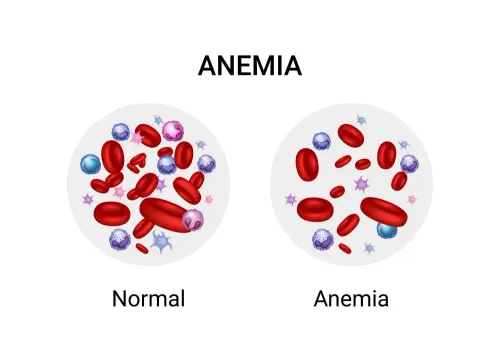
- Begin with a complete blood count with differential to measure haemoglobin, platelets, and white-cell numbers and types. Add a peripheral blood smear to examine cell appearance and a reticulocyte count to show how actively the marrow is producing red cells.
- Use inflammatory markers, urinalysis, and targeted infection or deficiency tests to assess non-cancer explanations such as infection or iron deficiency.
- For an abdominal or superficial mass, ultrasound is often the first imaging test because it distinguishes fluid from solid tissue without radiation. Further imaging depends on the examination and suspected site.
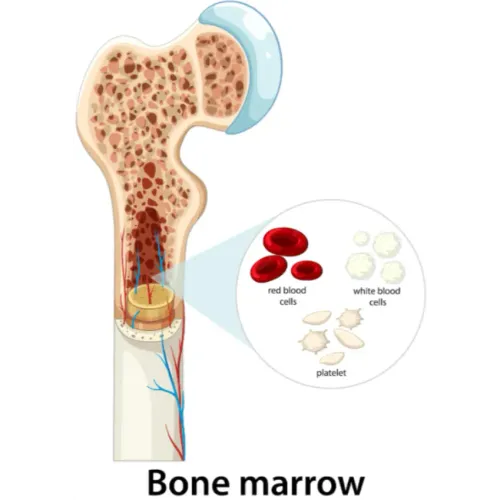
- If marrow disease such as acute leukaemia is suspected, perform a bone marrow aspiration or biopsy. If a mass needs definitive classification, use a tissue biopsy; diagnosis may require pathology, immunophenotyping, and molecular or cytogenetic testing.
| Finding | What it means | Usual next step |
|---|---|---|
| Low haemoglobin, platelets, or abnormal white cells | Could reflect infection, deficiency, inflammation, medication effects, or marrow disease | Repeat and investigate in context |
| Enlarged lymph node or lump | Not proof of cancer | Examine, monitor or image; biopsy if classification is needed |
| Normal blood count | Does not exclude a solid tumour | Consider symptoms, examination and imaging |
A specialist compares results with earlier counts and interprets them alongside symptoms, examination and growth. A scan or organ name alone cannot establish the diagnosis.
How does specialist care guide treatment, transplant decisions and follow-up?
The specialist first confirms the exact disease, lineage and risk group. Treatment response and genetic findings then guide treatment intensity, targeted medicines and changes to the plan. In Nagpur, families needing paediatric blood-cancer, transplantation or cellular-therapy evaluation can consult Dr. Atish Bakane for this disease-specific assessment.
| Option | What it uses | Main risks and role |
|---|---|---|
| Allogeneic transplant | Stem cells from another person | Graft-versus-host disease, infection and organ toxicity; selected according to disease biology, response, relapse risk, donor or graft options and organ health |
| Autologous transplant | The child’s collected stem cells | No classic graft-versus-host disease, but intensive conditioning, infection, organ toxicity and prolonged low blood counts remain |
| CAR T-cell therapy | Genetically modified T cells | Separate treatment for selected cancers; cytokine-release syndrome and neurological toxicity require rapid specialist care |
A bone-marrow transplant is not an automatic next step. The expected benefit must outweigh conditioning and transplant toxicity, especially after considering remission depth, relapse risk and organ health.
CAR T-cell therapy can also lower normal B cells or immunoglobulins for a prolonged period. Monitoring, infection prevention and immunoglobulin replacement may be needed.
Specialist long-term follow-up checks for relapse, infection, growth, endocrine, cognitive, psychosocial and reproductive effects after remission or transplant.
- What are the exact diagnosis and risk group?
- What is the treatment goal, and is a clinical trial relevant?
- Which symptoms require urgent contact?
- How will fertility, schooling, vaccination and infection prevention be managed?
- What surveillance covers relapse, growth, endocrine, cognitive, psychosocial and reproductive health?
Related service
EXPERTISE Inborn errors of metabolism are rare genetic disorders that affect the body’s metabolism. View service → |
Frequently asked questions
Which symptoms need emergency care for a child?
Seek emergency care for breathing difficulty, a seizure, loss of consciousness, severe bleeding, sudden weakness, or a child who is difficult to wake. Get urgent help when the child appears seriously unwell rather than waiting for a routine appointment.
When should a child have a same-week medical visit?
Arrange a same-week visit when symptoms persist, recur, or occur together without a clear short-lived explanation. Examples include ongoing fever, unusual bruising, pallor, persistent bone pain, swollen lymph nodes, weight loss, or marked fatigue.
What happens when a child is referred to a cancer specialist?
The specialist reviews the symptom timeline, growth, examination findings, family history and previous test results. They then decide which investigations are needed and explain what each result can and cannot show.
Does an abnormal blood test mean a child has cancer?
No. Infection, inflammation, nutritional deficiency and other conditions can cause abnormal results. The specialist interprets the blood count and other findings alongside the examination and may order repeat or more specific tests.
How does specialist care affect transplant decisions and follow-up?
The diagnosis, risk features, treatment response and overall health guide treatment choices. A transplant is considered only when its expected benefit justifies its risks, followed by planned monitoring for relapse, late effects, growth and development.