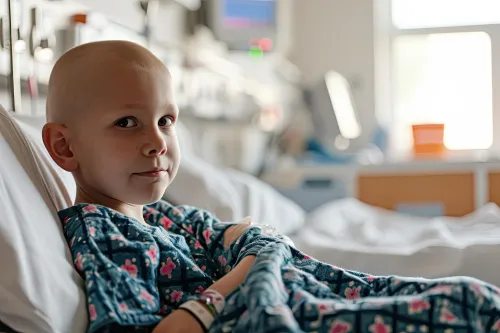

A child’s treatment plan depends on the exact cancer, its genetic features, how far it has spread and how quickly it responds to the first phase of therapy. By the end, you will understand how doctors confirm the diagnosis, compare treatment options, decide when transplantation or cellular therapy is appropriate, and plan care after treatment.
Key takeaways
- Ask how testing identified your child’s exact blood cancer subtype.
- Early treatment response helps doctors adjust the next phase of therapy.
- Transplant and CAR T-cell therapy suit specific clinical situations.
- Supportive care and follow-up continue after cancer treatment ends.
How doctors identify the specific blood cancer
A diagnosis requires more than an abnormal blood count. Doctors combine the child’s symptoms and examination with laboratory, marrow, tissue and imaging findings to confirm cancer and identify its exact subtype.
- History and examination: fever, bruising, bone pain, swollen lymph nodes, abdominal enlargement and pallor guide the initial work-up.
- Complete blood count with differential: measures red cells, platelets and white-cell types; blasts raise concern but do not prove cancer.
- Peripheral blood smear: a pathologist examines blood cells for immature or abnormal forms.
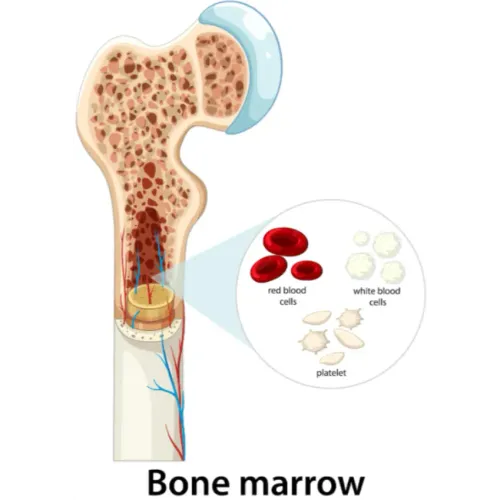
- Bone marrow aspiration and biopsy: samples from the marrow show whether abnormal cells are replacing normal blood production.
- Flow cytometry: detects proteins on abnormal cells and separates lymphoid from myeloid disease.
- Cytogenetic and molecular testing: finds chromosome changes, gene fusions and mutations that distinguish subtypes and influence risk.
- Imaging or lymph-node biopsy: helps assess childhood lymphoma or disease outside the marrow when examination indicates it.
Acute lymphoblastic leukemia and acute myeloid leukemia require different treatment protocols, even when both cause low blood counts. A lymph-node or other tissue biopsy usually establishes lymphoma, while marrow examination and genetic testing help identify less common marrow cancers.
Doctors use some results to classify risk after diagnosis rather than to prove cancer. They track measurable residual disease, or MRD, after treatment begins; persistent MRD signals a higher relapse risk and can change the treatment plan. Age, initial blood counts, genetic findings, disease spread and central nervous system involvement complete the diagnostic picture.
How diagnosis and early response shape the treatment plan
Two children with acute lymphoblastic leukaemia (ALL) can receive different treatment because “ALL” describes a broad disease category, not one relapse risk. Doctors combine the cancer’s biology, disease burden and response to early therapy into a risk-adapted treatment plan. The aim is to prevent relapse without giving lower-risk children unnecessary treatment toxicity.
At diagnosis, a complete blood count with differential, peripheral blood smear, and bone marrow aspiration and biopsy establish the child’s starting disease burden and cell pattern. Risk assessment then considers:
- Age and the initial white-cell count.
- Chromosome and gene findings that predict treatment response.
- Lineage, such as B-cell or T-cell disease.
- Disease in the central nervous system or other sites.
- Early treatment response, including measurable residual disease (MRD).
MRD measures cancer cells that remain after induction, even when ordinary tests show remission. MRD after induction is one of the strongest relapse predictors; persistent MRD can lead to intensified therapy, a clinical trial, or consideration of an allogeneic stem-cell transplant.
The same principle applies to acute myeloid leukaemia and other marrow cancers: genetic risk, response and relapse status alter the next step. A clinical trial is not automatically experimental care; paediatric trials often compare accepted approaches or reduce treatment for excellent responders while intensifying it for high-risk disease.
Eligibility can depend on the diagnosis, genetic subtype, organ function and MRD.
What treatment may involve from first therapy to advanced options
Children receive treatment matched to the cancer’s type, genetic risk, spread and early response. For acute lymphoblastic leukaemia (ALL), multi-agent chemotherapy usually starts with induction to achieve remission, followed by consolidation and, for higher-risk disease or poor measurable residual disease (MRD) response, intensification.
Treatment also reaches the central nervous system through intrathecal chemotherapy; cranial radiation is reserved for selected situations.
The pathway commonly includes:
- Induction: intensive first treatment removes visible leukaemia and establishes whether remission is achieved.
- Consolidation: additional chemotherapy clears hidden disease that could cause relapse.
- Intensification and maintenance: stronger treatment targets higher-risk disease, while prolonged lower-intensity therapy protects against recurrence, especially in ALL.
- For acute myeloid leukaemia, several intensive chemotherapy courses and consolidation are common; lymphoma treatment instead combines chemotherapy with disease-specific medicines, and sometimes surgery or radiation.
- Throughout therapy, teams manage fever or sepsis risk, tumour lysis, nausea, nutrition and transfusion needs, including irradiated or leukocyte-reduced blood products when indicated.
| Option | What it means | When it applies |
|---|---|---|
| Targeted or immune therapy | A drug or antibody attacks a defined cancer feature | When testing identifies a suitable target |
| Stem cell transplantation | Donor blood-forming cells replace damaged marrow after conditioning | Selected high-risk, persistent or relapsed disease |
| CAR T-cell therapy | Modified T cells are infused after lymphodepleting chemotherapy | Some children with relapsed or refractory B-cell ALL |
| Clinical trial | Compares accepted approaches or tests risk-adapted treatment | When diagnosis, prior therapy, organ function and MRD meet eligibility criteria |
When stem cell transplantation or CAR T-cell therapy enters the decision
The expected benefit outweighs risk when the child’s chance of relapse without cellular therapy is higher than the chance of serious transplant or treatment complications. In first remission, hematopoietic stem cell transplantation is usually reserved for high-risk disease, such as adverse genetic findings or persistent measurable residual disease (MRD).
It is considered more readily after relapse or when leukaemia has not responded to standard treatment.
| Option | What it offers | Main risks or limits |
|---|---|---|
| Hematopoietic stem cell transplantation | Donor immune cells can produce a graft-versus-leukaemia effect after conditioning chemotherapy | Graft-versus-host disease (GVHD), infections, organ injury, infertility, growth or endocrine problems, chronic GVHD and treatment-related death |
| CAR T-cell therapy | Modified T cells can target CD19 in some children with relapsed or refractory B-cell acute lymphoblastic leukaemia | Cytokine release syndrome, neurologic effects, B-cell aplasia, low immunoglobulins, manufacturing delays and relapse after antigen loss or weak cell persistence |
Donor selection affects the transplant’s balance of benefit and harm:
- An HLA-matched sibling often provides a strong match with established clinical experience.
- A matched unrelated donor expands the search but can take time to identify and arrange.
- A haploidentical family donor can make transplant possible when no closer match exists, with different immune and infection risks.
CAR T-cell treatment requires collecting the child’s T cells, manufacturing them, controlling the disease during the wait, giving lymphodepleting chemotherapy and infusing the cells. Dr. Atish Bakane helps families weigh these timelines, disease-risk findings and long-term effects rather than treating transplant as an automatic next step.
Related services
EXPERTISE Cancer can affect all parts of the body, including the blood. Leukemia and lymphoma are types of blood cancer. View service → |
Bleeding Disorders Bleeding Disorders A bleeding disorder is a condition that affects the way your blood normally clots. View service → |
How supportive care and long-term follow-up protect recovery
During intensive treatment, supportive care is active cancer care, not an optional extra. The team protects blood counts, controls symptoms, detects complications early and keeps treatment safe enough to continue.
- Use irradiated, leukocyte-reduced blood products for supportive transfusions when indicated.
- Treat fever urgently: infection treatment may require cultures, intravenous antibiotics and antifungal or antiviral medicines.
- Give antiemetics, pain relief and nutritional support when medicines or mouth sores make eating difficult.
- Monitor for tumour lysis syndrome, which can damage the kidneys and disturb potassium, phosphate and calcium levels.
- After CAR T-cell therapy, watch for cytokine-release syndrome, including fever, low blood pressure, low oxygen or organ dysfunction. Specialist teams may use tocilizumab or corticosteroids.
- Check for confusion, speech difficulty, seizures or reduced alertness, which can signal immune-effector-cell-associated neurotoxicity.
Remission ends visible cancer, not the need for medical care. Surveillance after treatment is planned around the drugs, radiation fields, transplant history and age at treatment.
Follow-up may include heart testing after anthracyclines, hormone and growth assessment, fertility counselling, bone-health checks, learning or neurocognitive support, psychological care and screening for second cancers. After transplantation, clinicians also watch for chronic graft-versus-host disease, recurrent infections, organ injury and other late effects.
Keep a treatment summary and attend scheduled reviews; report persistent fatigue, poor growth, learning changes, new lumps or unexplained pain promptly.
Frequently asked questions
How do doctors identify a child’s specific blood cancer?
They combine symptoms and examination findings with blood tests, bone marrow testing, tissue analysis and imaging to confirm the cancer and its subtype.
How does early treatment response affect the treatment plan?
Doctors use the child’s response to initial therapy, along with cancer subtype and risk features, to select and adjust later treatment.
When are stem cell transplantation or CAR T-cell therapy considered?
These advanced treatments enter the decision when the cancer’s subtype, risk profile, treatment response or relapse history makes them appropriate.
What does supportive care and long-term follow-up involve?
Care includes monitoring for infection and treatment effects, managing symptoms, checking recovery and watching for late effects after treatment.