
Aplastic anemia can range from reduced blood-cell production to a life-threatening marrow failure, and its cause changes both treatment and recovery prospects. You will learn which tests establish the diagnosis, when urgent care is needed, how doctors compare transplantation with immunosuppressive therapy, and why no single survival figure predicts one child’s outcome.
Key takeaways
- Aplastic anemia requires marrow examination and tests to exclude leukemia and inherited disorders.
- Fever, bleeding, severe weakness, or breathlessness needs urgent medical assessment.
- Doctors weigh disease severity, donor availability, age, and health when choosing HSCT or immunosuppression.
- Recovery depends on treatment response, infections, bleeding, relapse, and long-term follow-up.
What is aplastic anemia, and what causes it in children?
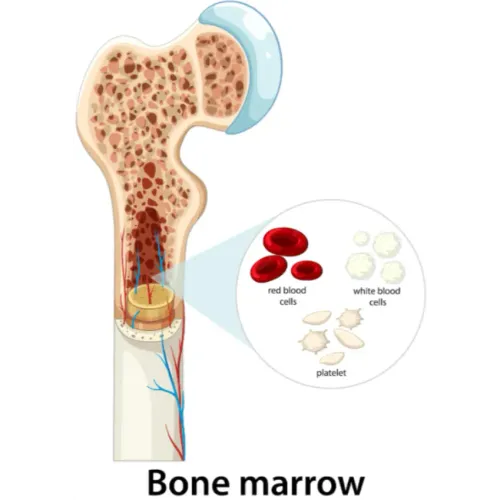
Aplastic anemia in children is bone-marrow failure: the marrow becomes too empty to produce enough red cells, white cells, and platelets. This creates pancytopenia, causing pallor and tiredness, infections, and bruising or bleeding. A low blood count alone does not prove aplastic anemia; doctors must examine the marrow and rule out other diseases.
| Condition | How it differs |
|---|---|
| Leukemia | Abnormal blood-forming cells multiply; the marrow is not simply empty. |
| Myelodysplastic syndrome | Marrow cells develop abnormal shapes or chromosomes and produce blood inefficiently. |
| Inherited marrow-failure syndrome | A genetic defect damages marrow production and may affect other organs. |
| Isolated low blood count | Only one cell line is reduced, such as red cells in iron deficiency or platelets in immune thrombocytopenia. |
Common acquired aplastic anemia causes include:
- An immune attack on the child’s own marrow, often with no identifiable trigger
- Medicines, including selected chemotherapy or other marrow-toxic drugs
- Chemicals such as benzene
- Viral illness, including hepatitis-associated disease and infections such as Epstein–Barr virus or parvovirus B19
- Fanconi anemia, in which cells are unusually sensitive to DNA-crosslinking medicines and radiation
- Dyskeratosis congenita, Shwachman-Diamond syndrome, and GATA2-related disease
These inherited conditions can occur without a family history because signs vary between relatives or a child carries a new genetic variant. Identifying the cause changes genetic counselling, donor assessment, conditioning, and monitoring.
How do doctors confirm aplastic anemia and measure its severity?
A reliable aplastic anemia diagnosis requires more than low blood counts. Doctors confirm marrow failure, then exclude leukemia, infection, nutritional deficiency, inherited syndromes, and other secondary causes.
1. Order a CBC with differential, reticulocyte count, and peripheral smear. The CBC measures hemoglobin, platelets, and white-cell subsets. The reticulocyte count shows whether the marrow is releasing new red cells, while the smear can reveal blasts or abnormal cells that suggest another diagnosis.
2. Perform bone-marrow aspiration and biopsy. The key finding is bone-marrow biopsy hypocellularity: fatty marrow containing too few blood-forming cells. Marrow morphology helps distinguish aplastic anemia from leukemia, myelodysplastic syndrome, and marrow infiltration.
3. Perform cytogenetic testing to detect chromosomal changes associated with myelodysplasia or another clonal disorder.
4. Test for viral infections and other secondary causes, review medicines and chemical exposures, and assess nutrition, including vitamin B12, folate, and copper when indicated.
5. Investigate inherited marrow-failure disorders with chromosome-breakage testing, telomere evaluation, and genetic panels when appropriate. A child can have an inherited disorder without a family history because a variant can be subtle or newly arising.
Severe aplastic anemia means hypocellular marrow plus at least two of these findings: ANC below 0.5 × 10^9/L, platelets below 20 × 10^9/L, or reticulocytes below 20 × 10^9/L. Very severe disease uses the same criteria with ANC below 0.2 × 10^9/L. These thresholds signal sharply increased infection and bleeding risk.
Which warning signs need urgent assessment, and how is a child supported while treatment is arranged?
Fever in a child with neutropenia is an emergency, even without chills or a high temperature. Seek urgent medical assessment for these aplastic anemia emergency symptoms:
- Neutropenic fever or a temperature at or above the threshold given by the treating team
- Unusual bleeding, blood in urine or stool, or bleeding that will not stop
- Bruises that appear suddenly or spread rapidly
- Severe pallor, breathlessness, dizziness, or fainting
- Marked fatigue, confusion, or difficulty waking
Supportive care for aplastic anemia protects the child while tests, donor assessment, and definitive treatment are arranged.
| Support | Purpose | Planning point |
|---|---|---|
| Red-cell transfusion | Treats symptomatic anaemia, pallor, breathlessness, or fatigue | Use thresholds and symptoms set by the treating team |
| Platelet transfusion | Treats significant bleeding or dangerously low platelets | Arrange urgently for active bleeding; do not wait for bruises to multiply |
| Fever assessment | Detects and treats bacterial or fungal infection | Evaluate promptly; selected high-risk children may receive antimicrobial prophylaxis |
| Transfusion planning | Reduces complications before possible transplantation | Ask whether products must be leukocyte-reduced and irradiated under the transplant centre’s policy |
Avoid directed donations from family members unless the transplant centre specifically instructs otherwise; they can increase sensitization and graft-rejection risk. Monitor children needing repeated transfusions for iron overload, which can damage organs and complicate transplantation. Doctors individualize every transfusion decision rather than relying on one haemoglobin or platelet number.
How do doctors choose between HSCT and immunosuppressive therapy?
A suitable HLA-matched sibling often makes allogeneic HSCT the preferred initial definitive treatment for severe acquired aplastic anemia in a fit child. Doctors still confirm that the disease is acquired, control active infection, assess transfusion history, and weigh age, overall health, severity, donor match, and access to timely specialist care.
| Option | What it means | When it is considered |
|---|---|---|
| Matched sibling HSCT | Transplant using a fully suitable sibling donor, with conditioning and graft-versus-host disease prevention | Often first choice for severe acquired disease when the child is fit and infection is controlled |
| Alternative-donor HSCT | Transplant using another well-matched family or unrelated donor, or another accepted donor source | Considered when immunosuppression is unsuitable, fails, or donor and centre factors support transplantation |
| Horse antithymocyte globulin and cyclosporine | Suppresses the immune attack on marrow; eltrombopag in children may be added in selected protocols | Used when there is no suitable matched sibling or when immunosuppression offers the safer option; eltrombopag depends on age, regulation, inherited-disease testing, and local expertise |
Alternative-donor HSCT carries risks including graft failure, graft-versus-host disease, infection, and organ toxicity. Immunosuppressive recovery takes weeks to months, and eltrombopag is not a universal substitute for transplantation.
Inherited marrow failure changes the plan. Fanconi anemia cells are unusually sensitive to DNA-crosslinking drugs and radiation, so syndrome-specific conditioning and family-donor evaluation are essential. A pediatric consultation with Dr. Atish Bakane in Nagpur can help families organise these decisions around the child’s genetic tests, blood counts, infection status, and donor results.
Related service
EXPERTISE Bone marrow transplant (BMT) also called as hematopoietic stem cell transplant (HSCT) is the procedure that is used to replace the unhealthy bone... View service → |
What determines a child’s chances of recovery after treatment?
Aplastic anemia prognosis in children depends on more than the diagnosis. Severity, age, overall fitness, infection control, speed and quality of supportive care, donor match, treatment response, transfusion exposure, and whether the disease is acquired or inherited all change the outlook. Published survival figures cannot predict one child’s result.
| Pathway | How it affects recovery from aplastic anemia | Important limitation |
|---|---|---|
| Matched-sibling HSCT | Offers definitive replacement of the blood-forming system for many fit children with severe acquired disease | Graft failure, infection, organ toxicity, and graft-versus-host disease remain possible |
| Immunosuppression | A responder can regain blood counts without transplantation | Relapse after immunosuppression, clonal cytogenetic changes, myelodysplastic syndrome, or a paroxysmal nocturnal hemoglobinuria clone can appear later |
| Inherited marrow failure | Requires syndrome-specific conditioning, donor assessment, and genetic counselling | Fanconi anemia, dyskeratosis congenita, or GATA2-related disease changes transplant planning and lifelong surveillance |
Normal counts do not always mean a permanent cure. Long-term follow-up after HSCT or immunosuppression includes regular blood counts and, when indicated, marrow checks.
Ask the care team to monitor:
- Chronic graft-versus-host disease and late infections after HSCT
- Growth, puberty, thyroid and other endocrine effects
- Fertility, bone health, and secondary cancers
- Psychological wellbeing, school progress, and educational support needs
Frequently asked questions
What causes aplastic anemia in children?
Aplastic anemia occurs when bone marrow stops making enough red cells, white cells, and platelets. Causes include inherited bone-marrow-failure syndromes, immune attack on marrow, certain medicines or chemicals, viral infections, and cases where no cause is found.
How do doctors confirm aplastic anemia and measure its severity?
Doctors use a complete blood count, reticulocyte count, peripheral blood smear, bone-marrow aspirate and biopsy, and tests that rule out leukemia, inherited disorders, infections, and other causes of pancytopenia. Severity depends on marrow cellularity and the levels of neutrophils, platelets, and reticulocytes.
Which warning signs need urgent assessment in a child with aplastic anemia?
Seek urgent assessment for a fever, chills, breathing difficulty, marked weakness, persistent vomiting, a new rash of pinpoint spots, uncontrolled bleeding, blood in vomit or stool, black stools, severe headache, or confusion. Low neutrophils increase infection risk, while low platelets increase bleeding risk.
How do doctors choose between HSCT and immunosuppressive therapy?
Doctors consider disease severity, the child’s age and overall health, the availability of a suitable donor, infection status, inherited marrow-failure testing, and family preferences. HSCT replaces diseased marrow with donor stem cells, while immunosuppressive therapy suppresses the immune attack on marrow.
What determines a child’s chances of recovery after treatment?
Recovery depends on disease severity, treatment timing, donor match when HSCT is used, response to immunosuppressive therapy, infections, bleeding complications, graft-versus-host disease, relapse, and long-term monitoring. Follow-up checks blood counts, marrow function, treatment effects, and late complications.