
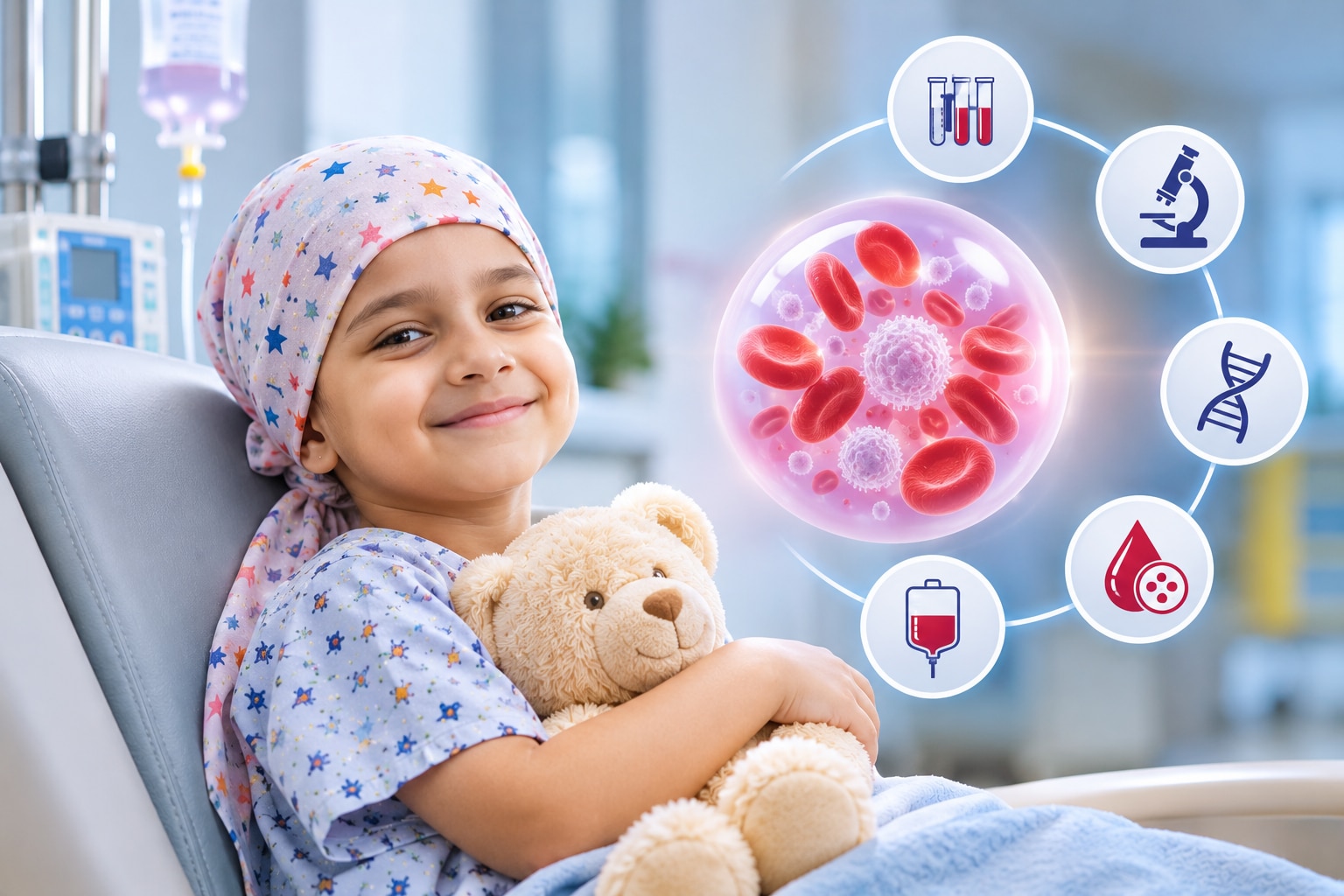
A child with unusual pallor, bruising, fever, bone pain or repeated infections needs more than a label such as “low hemoglobin.” By the end, you will know which specialist manages these problems, which symptoms need urgent care, how testing separates similar conditions, and why treatment and long-term follow-up must be tailored to the child.
Key takeaways
- Seek emergency care for severe breathing trouble, uncontrolled bleeding, seizures, or unusual sleepiness.
- Ask which tests will identify the cause of an abnormal blood count.
- Compare treatment options by disease biology, risk group, and response to therapy.
- Keep specialist follow-up appointments to monitor growth, organs, immunity, and recurrence.
What a Pediatric Hematology-Oncology Specialist Adds to a Child’s Care
Children are not small adults: blood volume, drug metabolism, immune development, growth and organ vulnerability change with age. A pediatric hematology-oncology specialist combines child-specific care with expertise in blood disorders, cancer, transfusion medicine, stem-cell transplantation and cellular therapy.
| Clinician | Main scope | What differs |
|---|---|---|
| General pediatrician | Common illnesses and initial assessment | Identifies abnormal findings, starts basic tests and coordinates referral |
| Adult hematologist | Blood disorders in adults | Uses adult dosing, disease patterns and organ-risk thresholds |
| General oncologist | Cancer treatment across age groups | May not focus on childhood development, congenital disorders or pediatric protocols |
| Pediatric hematology-oncology specialist | Childhood blood disorders and cancers | Adjusts diagnosis and treatment for growth, puberty, fertility, school, family needs and long-term effects |
The specialty covers anemia, including iron-deficiency and inherited forms; sickle cell disease and thalassemia care; platelet disorders; haemophilia and other clotting-factor deficiencies; leukemia; lymphoma; immune disorders; and inherited or acquired bone-marrow-failure syndromes. A child may need transfusions, iron or factor replacement, immunosuppression, chemotherapy, immunotherapy, transplantation or cellular therapy.
This specialist also tracks more than remission or a corrected blood count. Treatment plans account for measurable disease biology and response, while follow-up checks growth, puberty, fertility, thyroid function, heart, lungs, kidneys, learning and mental health. That continuity helps detect late effects before they become permanent problems.
Recognizing Warning Signs and Knowing When to Seek Emergency Care
A bruise after active play, a short-lived fever with a cold, or occasional nosebleeding after dry air can occur in healthy children. Persistent pallor, unexplained bruising without injury, recurrent nosebleeds, or fatigue that limits play needs specialist assessment, especially when several signs appear together.
These findings do not prove cancer, but waiting can delay diagnosis of anemia, a platelet disorder, leukemia, or a clotting problem.
Arrange a pediatric hematology assessment for:
- Bone or joint pain, swollen lymph nodes, weight loss, night sweats, or repeated infections
- Pallor with breathlessness, dizziness, fast heartbeat, poor growth, or reduced activity
- Nosebleeds lasting more than 20 minutes despite firm pressure, frequent gum bleeding, or unusually heavy menstrual bleeding
- Fever lasting several days without a clear cause, including prolonged fever in children receiving cancer treatment
| Situation | Action | Why it matters |
|---|---|---|
| Mild, brief symptom with an obvious cause | Monitor and mention it at the next visit | Childhood infections and minor injuries are common |
| Persistent or recurring warning sign | Book prompt specialist assessment | Blood-count, platelet, immune, or clotting disorders need testing |
| Uncontrolled bleeding, breathing difficulty, severe weakness, fainting, or altered consciousness | Seek emergency care immediately | These signs can indicate major blood loss, severe anemia, infection, or organ compromise |
| Fever during cancer treatment, particularly with neutropenia | Go to the emergency department now | Serious infection can progress without localizing symptoms |
Do not wait for a routine appointment if the child is difficult to wake, has a seizure, or looks severely unwell.
How Doctors Find the Cause of an Abnormal Blood Count
The pattern in a complete blood count with differential often narrows the cause before specialised testing begins. Doctors review haemoglobin, mean corpuscular volume (MCV), red-cell count, white-cell and platelet numbers, symptoms, growth, diet, bleeding, medicines, infections, family history and ancestry.
They then combine findings from:
- A reticulocyte count, which shows whether bone marrow is producing red cells. A low count suggests underproduction; a high count points toward bleeding or red-cell destruction.
- Ferritin and iron studies, including serum iron, transferrin saturation and total iron-binding capacity. Low ferritin supports iron deficiency, but infection or inflammation can raise ferritin.
- A peripheral blood smear, examined for small pale cells, target cells, abnormal white cells, blasts, sickled cells or fragmented red cells.
- Vitamin B12 and folate tests when cells are large, especially with poor diet, intestinal disease or neurological symptoms.
- Bilirubin, lactate dehydrogenase, haptoglobin and a direct antiglobulin test when haemolysis is suspected.
- Haemoglobin electrophoresis or genetic testing when thalassemia or another inherited haemoglobin disorder is possible.
Iron-deficiency anemia usually shows low MCV, depleted iron stores and a raised red-cell distribution width. Thalassemia often has a very low MCV with a relatively preserved red-cell count, target cells and a family pattern.
| Finding | More consistent with |
|---|---|
| Low reticulocytes with pancytopenia | Aplastic anemia or marrow failure |
| Blasts or several abnormal cell lines | Leukemia; urgent specialist assessment |
| Fever with temporary count changes | Infection or inflammation |
| Macrocytosis with low B12 or folate | Nutritional deficiency |
| Kidney disease, chronic inflammation or ongoing bleeding | Other acquired anemia causes |
Why Treatment Is Chosen by Biology, Risk and Response
A child’s age, symptoms and test results can change treatment from a supplement to intensive therapy. Clinicians assess haemoglobin, platelets, white-cell and neutrophil counts, genetic findings, kidney, liver, heart and lung function, active infection, bleeding or anaemia symptoms, and response to initial treatment. A low count alone does not identify the cause or treatment.
Risk-adapted treatment matches intensity to relapse risk and expected benefit. Acute lymphoblastic leukemia treatment phases include remission induction, consolidation or intensification, maintenance and central-nervous-system-directed therapy. Age, genetics and measurable residual disease guide adjustments.
Poor response can lead to intensification, transplant or cellular therapy; organ dysfunction and infection risk can require dose changes, delay or inpatient monitoring.
Treatment choice commonly follows this pattern:
| Treatment | When it applies | What changes the decision |
|---|---|---|
| Iron | Confirmed iron deficiency without dangerous symptoms | Absorption, adherence and response |
| Transfusion | Severe symptomatic anaemia, bleeding or dangerously low platelets | Symptoms, count and active bleeding |
| Factor replacement | Haemophilia or another factor deficiency with bleeding or before procedures | Missing factor and bleeding severity |
| Chemotherapy | Leukemia, lymphoma or another cancer requiring disease control | Genetics, risk group, organ function and response |
| Immunotherapy | Immune-mediated disease or selected cancer | Target, infection risk and response |
| Antibiotics | Suspected or confirmed bacterial infection, especially with neutropenia | Fever, cultures and clinical stability |
| Immunoglobulin | Antibody deficiency or prolonged B-cell aplasia | Infection history and immunoglobulin level |
| Cellular therapy | Selected relapse, high-risk disease or marrow failure | Donor, organ fitness and expected benefit |
CAR-T therapy requires monitoring for cytokine-release syndrome and neurotoxicity; corticosteroids, anti-cytokine treatment or intensive care may be needed. Prolonged B-cell aplasia can require immunoglobulin replacement.
Specialist Follow-Up Protects Health Beyond the Initial Diagnosis
Coordinated specialist monitoring protects children during treatment because blood counts, infection risk, organ function and measurable disease response can change quickly. A paediatric team adjusts medicines, transfusions, chemotherapy or immune treatment before a complication becomes dangerous. Fever during neutropenia is an emergency, even without a visible source of infection.
Remission ends visible disease, not the need for surveillance. After haematopoietic stem-cell transplantation or cellular therapy, clinicians monitor graft failure, infections, organ toxicity and graft-versus-host disease. They also screen for late effects of childhood cancer treatment, including impaired growth, delayed puberty, thyroid disease, reduced fertility, heart or lung injury, learning difficulties and mental-health problems.
The schedule depends on the child’s diagnosis, treatment exposures and age.
For an assessment with Dr. Atish Bakane or another paediatric specialist, bring a complete record rather than relying on memory:
- Family treatment records, including diagnosis, pathology, genetic or molecular results and treatment dates
- Recent blood counts, imaging reports, marrow reports and transfusion details
- A current medicine list with doses, allergies and missed doses
- A written timeline of fever, bleeding, pain, fatigue, infections, appetite and weight changes
- Transplant or cellular-therapy documents, including donor information, conditioning treatment and previous graft-versus-host disease
- Family history of anaemia, bleeding, clotting, immune disorders or early cancers
Bring the child’s vaccination record too. Accurate records prevent duplicated tests, unsafe medicines and missed follow-up.
Related services
Hemoglobinopathy Hemoglobinopathy Hemoglobinopathy is a group of disorders in which there is abnormal production or structure of the hemoglobin molecule. |
EXPERTISE Cancer can affect all parts of the body, including the blood. Leukemia and lymphoma are types of blood cancer. View service → |
Frequently asked questions
What does a pediatric hematology-oncology specialist add to a child’s care?
The specialist applies child-specific expertise in blood disorders, cancer, transfusion medicine, stem-cell transplantation, and cellular therapy.
When should a child with possible blood-disorder symptoms receive emergency care?
Seek emergency care for severe breathing trouble, uncontrolled bleeding, seizures, or unusual sleepiness.
How do doctors find the cause of an abnormal blood count?
Doctors interpret the complete blood count alongside the child’s symptoms, examination, medical history, and targeted diagnostic tests.
How is treatment chosen for childhood blood disorders and cancer?
Treatment is selected using the disease’s biology, risk classification, and the child’s response to therapy.
Why is follow-up important after the initial diagnosis or treatment?
Specialist follow-up monitors treatment response, recurrence, growth, organ health, immunity, and late effects.
Related services
Bleeding Disorders Bleeding Disorders A bleeding disorder is a condition that affects the way your blood normally clots. View service → |
EXPERTISE prevent your body from fighting infections and diseases. This type of disorder makes it easier for you to catch viruses and bacterial infections. View service → |
EXPERTISE Bone marrow transplant (BMT) also called as hematopoietic stem cell transplant (HSCT) is the procedure that is used to replace the unhealthy bone... View service → |
EXPERTISE Inborn errors of metabolism are rare genetic disorders that affect the body’s metabolism. View service → |