Families need a clear plan for what happens after a referral, how diagnosis is confirmed, and how daily life changes during treatment. By the end, you will know what to prepare for each stage, which warning signs need urgent action, and how to support recovery beyond the last treatment cycle.
Key takeaways
- Bring symptom timelines, medication lists and family medical history to the first visit.
- Expect treatment plans to differ by cancer type, stage, test results and treatment response.
- Create clear home and hospital routines for medicines, appointments, hygiene and warning signs.
- Keep follow-up visits to monitor recurrence, late effects, growth, learning and emotional recovery.
From Referral to a Confirmed Diagnosis: What Happens First?
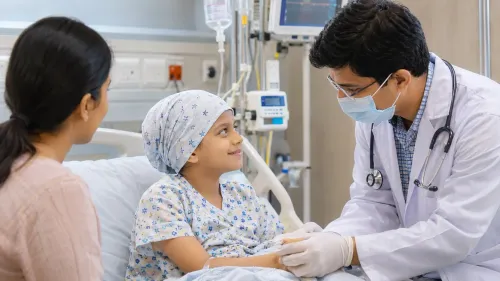
At the first oncology visit, the doctor reviews why the child was referred, asks about the symptom timeline, and takes a medical and family history. A physical examination follows, with attention to pallor, bruising, lymph nodes, abdomen, bones, neurological signs, weight and general growth.
Bring:
- A medication list, including doses and recent antibiotics or steroids
- The vaccination record
- Previous blood-test results and other reports
- Imaging discs and written ultrasound, CT, MRI or PET reports
- Pathology reports, if tissue was already tested
- Referral letters and discharge summaries
Further tests depend on the suspected illness:
| Test | What it investigates |
|---|---|
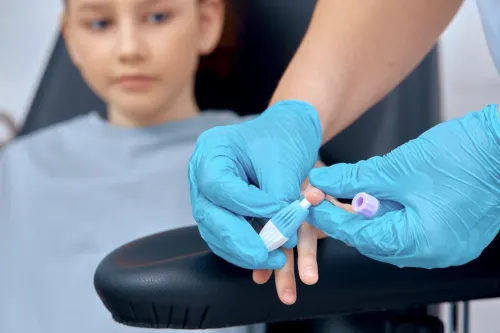
| Complete blood count and peripheral smear | Abnormal blood-cell numbers or appearance |
| Bone marrow aspiration and biopsy | Suspected leukaemia or marrow disease |
| Lymph-node biopsy | Many suspected lymphomas |
| Ultrasound, CT, MRI or PET | A mass, nearby structures or disease spread |
| Cerebrospinal-fluid testing | Possible central nervous system involvement |
| Pathology, cytogenetic and molecular tests | The exact disease, genetic changes and risk features |
Diagnosis is only the first layer. Treatment intensity can also depend on genetic findings, disease spread, response to early treatment and measurable residual disease. These results help the team decide whether chemotherapy alone is appropriate or whether transplantation or cellular therapy should be considered.
How Treatment Plans Change Across Cancer Types
Two children with cancer can receive different treatments because risk depends on pathology, molecular or cytogenetic findings, disease spread, early treatment response and measurable residual disease—not just the cancer’s name.
| Cancer type | Common treatment emphasis | What changes the plan |
|---|---|---|
| Leukaemia | Chemotherapy cycles with recovery periods; targeted therapy, immunotherapy or transplant for selected risk groups | Molecular findings, measurable residual disease and relapse risk |
| Lymphoma | Chemotherapy, with radiation therapy or targeted therapy for selected cases | Subtype, spread, early response and residual disease |
| Solid tumours | Surgery to remove the primary tumour, often combined with chemotherapy | Resectability, stage, pathology, margins and molecular findings |
Chemotherapy is given in planned cycles so blood counts and healthy tissues can recover between courses. Surgery is central for many solid tumours because removing the tumour provides local control and additional tissue for pathology.
Radiation therapy is considered when disease remains after surgery, affects a sensitive site, or has a high risk of local return; doctors weigh its benefits against effects on growing tissues.
Targeted therapy or immunotherapy is selected only when pathology and molecular testing identify a suitable target or immune strategy. Transplantation is not simply stronger chemotherapy. An autologous haematopoietic stem-cell transplant returns the child’s own collected cells and does not cause donor-derived graft-versus-host disease.
An allogeneic transplant uses donor cells and can provide a graft-versus-leukaemia effect, but adds risks of graft-versus-host disease, graft failure and prolonged immune recovery.
CAR-T-cell therapy requires specialist monitoring for cytokine release syndrome and immune effector cell-associated neurotoxicity syndrome, including fever, low blood pressure, breathing difficulty, confusion, seizures or reduced consciousness.
What Daily Treatment Requires at Home and in Hospital
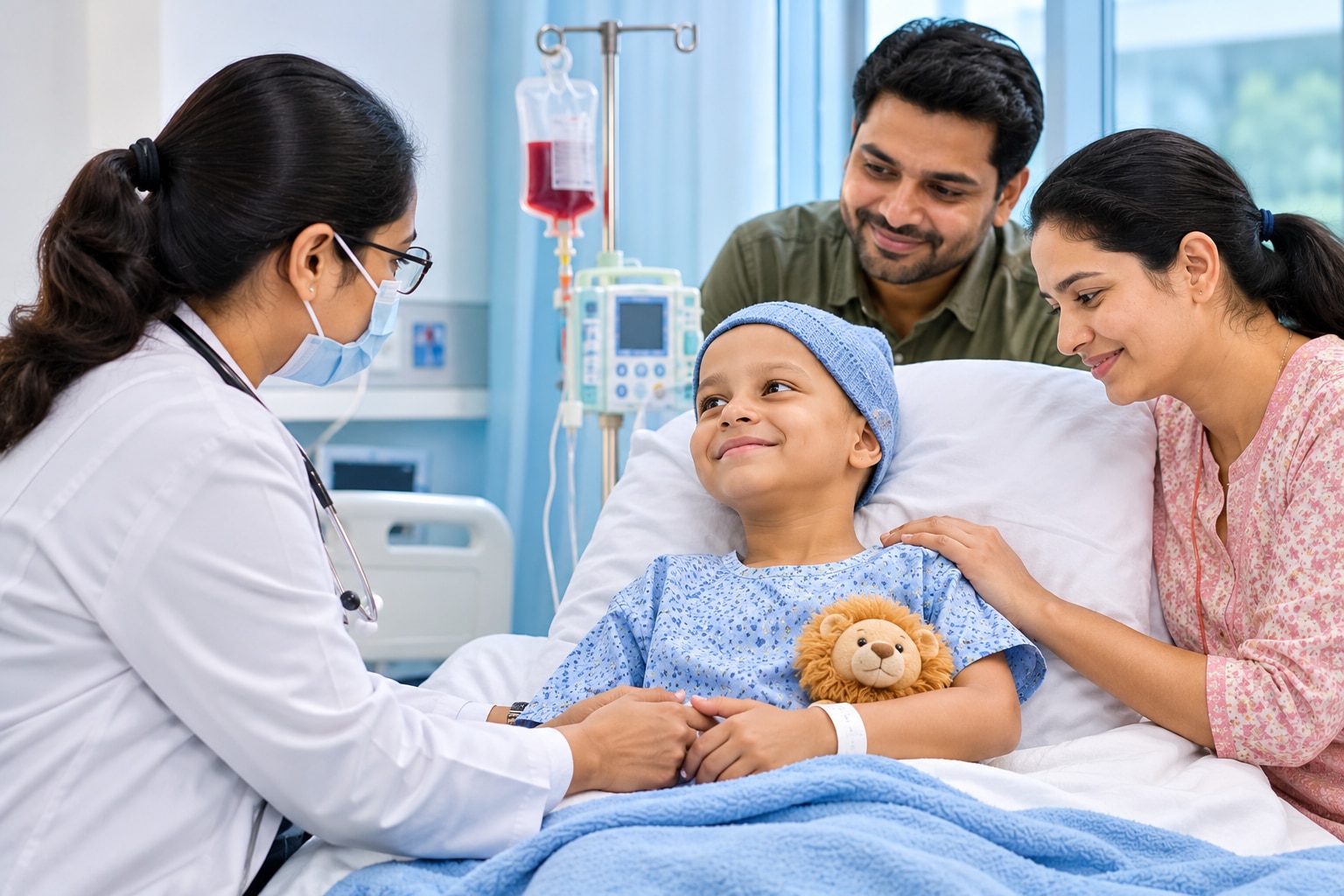
Treatment days may be brief outpatient visits or planned admissions lasting days or weeks. Expect blood tests before treatment decisions, blood transfusions when counts are low, nutrition support when eating becomes difficult, and medicines taken at exact times.
1. Keep the oncology team’s written medication chart beside every dose. Record vomiting, missed doses, pain, mouth sores, nausea, constipation, fatigue, poor appetite and hair loss; do not change or stop treatment without instructions.
2. A central venous catheter may deliver chemotherapy, blood products or nutrition and allow repeated blood sampling. Inspect the dressing and skin daily, and call urgently for redness, drainage, swelling, pain along the line, blockage, dislodgement, a break or a new fever.
3. Use the treating centre’s written fever threshold and emergency number. The plan may specify one temperature of 38.3°C or 38.0°C lasting one hour; call immediately at that threshold rather than waiting for the next appointment. Febrile neutropenia can become dangerous while a child still looks well.
Do not give paracetamol, ibuprofen or another fever-masking medicine before speaking with the oncology team unless instructed. Follow the written emergency plan, or seek emergency care for breathing difficulty, severe weakness, confusion, collapse or similar symptoms.
4. Infection precautions depend on the child’s neutrophil count, catheter, medicines and transplant status. Wash hands, avoid sick contacts and follow food-safety instructions; complete isolation is not automatically necessary. After CAR-T-cell therapy, fever, low blood pressure, breathing difficulty, confusion, language problems, tremor, seizures or reduced consciousness require specialist advice immediately.
Protecting Emotional Health, Development and Family Life
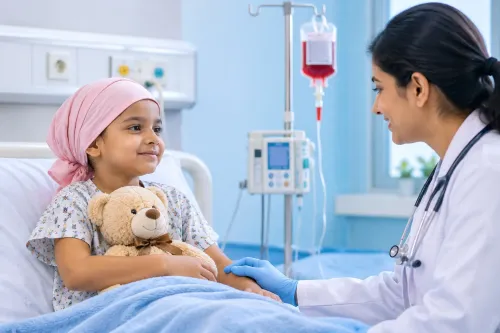
A child can receive intensive treatment without losing every ordinary part of childhood. Use age-appropriate explanations, describe what will happen and what may hurt, and avoid promises you cannot keep. Medical play with dolls, drawings or toy equipment helps younger children practise procedures; older children may prefer detailed explanations, privacy and time for questions.
1. Protect daily life: keep regular sleep, meals, stories, games and cultural routines where treatment allows. Let siblings stay connected through visits, calls, drawings or shared activities, while explaining infection precautions without making the treated child feel untouchable.
2. Give the child a voice. Offer meaningful choices, such as which arm for a blood-pressure cuff or which distraction to use, and seek assent for decisions that affect them. Consent still belongs to the authorised adult, but participation builds trust.
3. Treat school support as clinical care. Coordinate with teachers about fatigue, steroid-related mood or concentration changes, infection risk, hearing or vision changes and neurocognitive effects. Arrange home or hospital teaching, formal accommodations and a staged return that begins with manageable hours and adjusts to energy and medical risk.
4. Discuss fertility preservation before treatment. Options include sperm cryopreservation for post-pubertal boys and oocyte or embryo cryopreservation for post-pubertal girls; testicular tissue cryopreservation for prepubertal boys requires specialist discussion.
Paediatric palliative care can begin alongside chemotherapy, transplant or cellular therapy for pain, nausea, sleep, anxiety and family goals. It is not hospice, which generally accompanies a decision to focus on comfort instead of disease-directed treatment. Dr. Atish Bakane can coordinate individualized treatment or transplant planning with psychosocial and developmental support.
Related services
Paediatric Solid Tumors Solid tumor is a term used to describe many forms of cancer that can happen throughout the body. View service → |
EXPERTISE Cancer can affect all parts of the body, including the blood. Leukemia and lymphoma are types of blood cancer. View service → |
After Treatment: Surveillance, Recovery and Survivorship
Finishing treatment does not end specialist follow-up. Surveillance visits may include examination, blood tests, imaging and disease-specific monitoring for relapse or treatment complications. The schedule depends on what the child received—such as anthracyclines, alkylating agents, radiation or transplantation—not only on the original diagnosis.
Keep a treatment summary and take it to every new doctor. Record:
- Chemotherapy agents and cumulative doses
- Radiation fields and doses
- Transplant type, conditioning medicines and cellular therapy
- Major complications, infections and immune-suppressing medicines
| Exposure | Monitoring focus | Examples of concern |
|---|---|---|
| Anthracyclines | Heart assessment | Echocardiograms for reduced heart function |
| Radiation or alkylating agents | Endocrine function, fertility and second cancers | Growth, puberty, reproductive health and organ-specific screening |
| Head, neck or brain treatment | Hearing, cognition and mental health | Audiology, school performance and emotional wellbeing |
| Transplant or cellular therapy | Immune recovery, lungs, bones and relapse | Blood counts, pulmonary review and disease-specific tests |
Late effects can involve fertility, bone health, hearing, cognition and mental health. A survivorship care plan names the tests, timing and clinicians responsible for each risk.
After an allogeneic transplant, acute graft-versus-host disease can affect the skin, gastrointestinal tract and liver. Chronic graft-versus-host disease can involve the skin, mouth, eyes, lungs and joints; immunosuppression raises infection risk.
Follow the transplant centre’s vaccine schedule: inactivated vaccines restart when directed, while measles-mumps-rubella and varicella are delayed until recovery criteria are met, commonly at least 24 months after transplant.
Call the oncology team urgently for the centre’s fever threshold, breathing difficulty, confusion or sudden weakness. Keep written emergency contacts and update the survivorship care plan at every review.
Frequently asked questions
What happens during the first pediatric oncology visit?
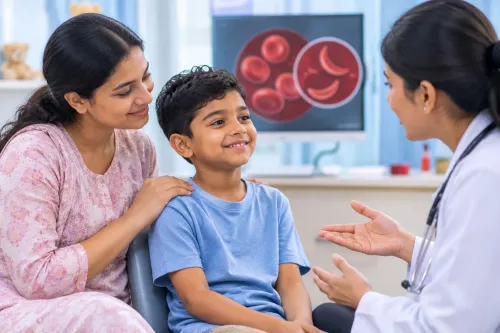
The doctor reviews the referral, symptom timeline, medical and family history, then examines the child’s pallor, bruising, lymph nodes, abdomen, bones, neurological signs, weight and growth.
Why do pediatric cancer treatment plans differ?
Plans change according to the cancer type, disease extent, test results, the child’s response to treatment and the intended treatment goals.
What does daily pediatric cancer treatment involve?
Families manage medicines, appointments, hygiene, nutrition, symptom monitoring and communication with the care team at home and in hospital.
How can families protect a child’s emotional health during treatment?
Maintain age-appropriate routines, honest explanations, school and play when possible, and support for the child, parents and siblings.
What happens after pediatric cancer treatment ends?
Surveillance visits check for recurrence, treatment-related late effects, growth, development, learning, emotional health and the child’s return to daily life.
Related services
EXPERTISE Bone marrow transplant (BMT) also called as hematopoietic stem cell transplant (HSCT) is the procedure that is used to replace the unhealthy bone... View service → |
General Appointment ₹500 General Appointment |